Recovering from a sports injury can be a challenging journey, and it’s essential to understand that the rehabilitation process doesn’t stop when you’re pain-free or have regained basic functionality. The later stages of sports rehab are crucial for ensuring that you return to your sport stronger, more resilient, and less prone to re-injury.
We will explore key tips to help you maximize your recovery during these critical phases.
Understanding the Stages of Sports Rehab
Sports rehab generally progresses through three main stages:
1. Acute Stage: Focuses on reducing pain and inflammation and restoring basic movement.
2. Subacute Stage: Emphasizes regaining strength, flexibility, and range of motion.
3. Late Stage: Aims to enhance sport-specific skills, build endurance, and prepare for a safe return to full activity.
The later stages are about rebuilding strength and function, enhancing neuromuscular control, and progressively challenging the body to meet the demands of your sport.
1. Prioritize Sport-Specific Strengthening
As you move into the later stages of rehab, your exercises should mimic the movements and demands of your sport. For example, a soccer player should incorporate agility drills, sprint intervals, and dynamic lower-body exercises. A tennis player may focus on rotational core exercises and overhead movements. This helps your body adapt to the specific stresses it will face during competition.
Tip: Incorporate functional exercises that replicate sports actions, such as lunges with rotation for tennis players or lateral bounds for basketball players. These exercises improve strength and neuromuscular control in the movements you use most frequently.

2. Focus on Balance and Proprioception
Injury often disrupts proprioception—the body’s ability to sense its position in space—which can lead to poor coordination and increased risk of re-injury. Balance training is essential in the later stages of rehab to restore proprioceptive function and stability.
Tip: Use tools like balance boards, stability balls, or single-leg exercises to challenge your balance. Perform these exercises on different surfaces (e.g., grass, gym mat) to simulate various playing conditions.
3. Gradually Increase Intensity and Complexity
In the later stages, it’s essential to gradually increase the intensity, volume, and complexity of your workouts. This progression should be systematic to prevent overloading your recovering tissues.
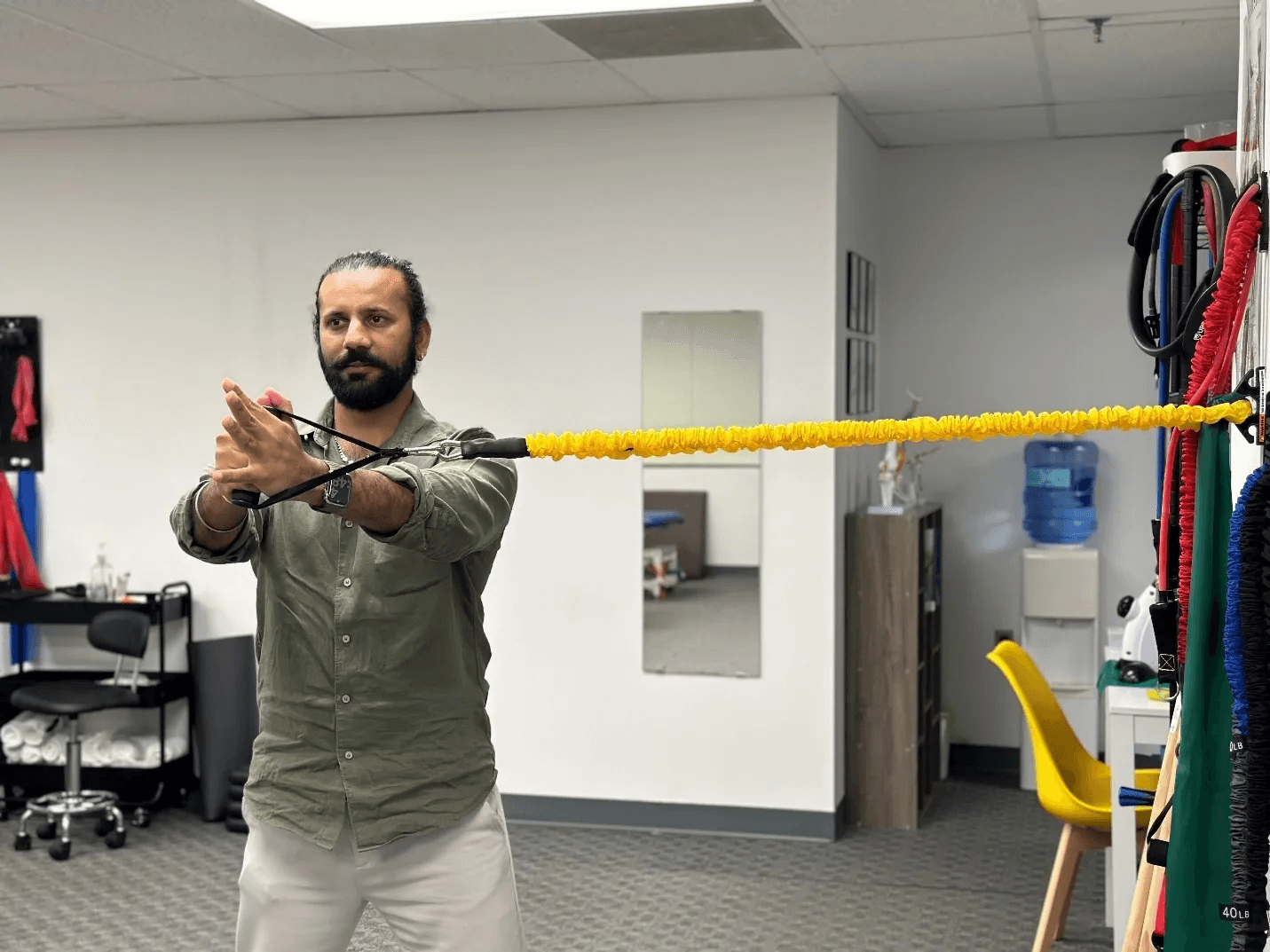
Tip: Increase the intensity by adding weights, using resistance bands, or increasing the speed of movements. Progress to more complex exercises like plyometrics (jumping and bounding drills) and multidirectional movements that mirror the demands of your sport.
4. Implement Plyometric and Agility Training
Plyometric exercises, such as jump squats and box jumps, help develop explosive power and improve neuromuscular control. Agility training, including ladder drills and cone drills, enhances quick direction changes, which is crucial for sports like football and basketball.
Tip: Start with low-impact plyometrics and shorter agility drills, then gradually increase the complexity and intensity. Always prioritize proper form to minimize the risk of re-injury.
5. Monitor Fatigue and Recovery
Pushing too hard too fast in the later stages can lead to setbacks. It’s crucial to balance training intensity with adequate recovery to avoid overuse injuries.
Tip: Track your fatigue levels and recovery status through subjective measures (like how you feel) and objective measures (like heart rate variability). Incorporate active recovery techniques such as foam.
If you’re in the final stages of your sports rehab journey and want to ensure a strong recovery, visit Virginia’s Physical Therapy in Herndon, VA. Our experienced team specializes in sports physical therapy and orthopedic rehabilitation to help you regain full functionality and prevent re-injury.
Contact our rehab outpatient clinic to create a personalized plan tailored to your needs.