Persistent muscle tightness, recurring pain, or restricted movement can make everyday activities and exercise frustrating. Stretching or rest may provide temporary relief, but when discomfort keeps returning, you may wonder whether a more targeted approach could help. Dry needling therapy near me is one option physical therapists may consider when muscle tightness or trigger points are contributing to pain and movement limitations.
At Virginia’s Physical Therapy, we use dry needling as part of individualized rehabilitation when it is appropriate for a patient’s condition and goals. Our licensed physical therapists combine this technique with other evidence-based treatments to support mobility, function, and recovery.
What Is Dry Needling?
Dry needling is a specialized physical therapy technique that uses thin, sterile, filiform needles to target tight muscles and trigger points. The needles do not contain medication, which is why the technique is called “dry” needling. Unlike acupuncture, dry needling focuses on the musculoskeletal system and is used to address muscle dysfunction and related movement problems.
The technique may help reduce muscle tension, decrease pain sensitivity, improve mobility, and support normal muscle function. However, it is not automatically appropriate for every patient. A physical therapist should first evaluate your symptoms and determine whether dry needling fits your rehabilitation plan.
When Should You Consider Dry Needling?
You may want to discuss dry needling with a qualified physical therapist if you experience persistent muscle tightness, trigger points, restricted mobility, or musculoskeletal pain that continues despite other conservative approaches.
It may be considered for several conditions, including neck and back pain, headaches and migraines related to muscle tension, tendonitis, sports injuries, muscle strains, plantar fasciitis, sciatica, and other problems involving muscle tightness or trigger points.
The important point is that dry needling should be based on an individual assessment rather than simply choosing it because you have pain.
Can Dry Needling Help With Chronic Muscle Pain?
Chronic muscle discomfort can affect sleep, work, exercise, and everyday movement. When overactive or tight muscles continue contributing to discomfort, dry needling may be incorporated into a broader rehabilitation program.
We may combine dry needling with therapeutic exercises, manual therapy, posture correction, mobility work, and functional movement training. This comprehensive approach addresses more than the immediate sensation of pain and helps patients work toward improved movement and function.
Is Dry Needling Useful for Sports Injuries?
Athletes and active individuals can develop muscle tightness or trigger points through repetitive movement, overuse, or injury. In appropriate cases, dry needling can be incorporated into sports injury rehabilitation to address muscle tension and mobility limitations.
Our rehabilitation programs can combine dry needling with strengthening, flexibility, therapeutic exercise, and functional training. This allows treatment to focus on the broader recovery process rather than using dry needling as a standalone solution.
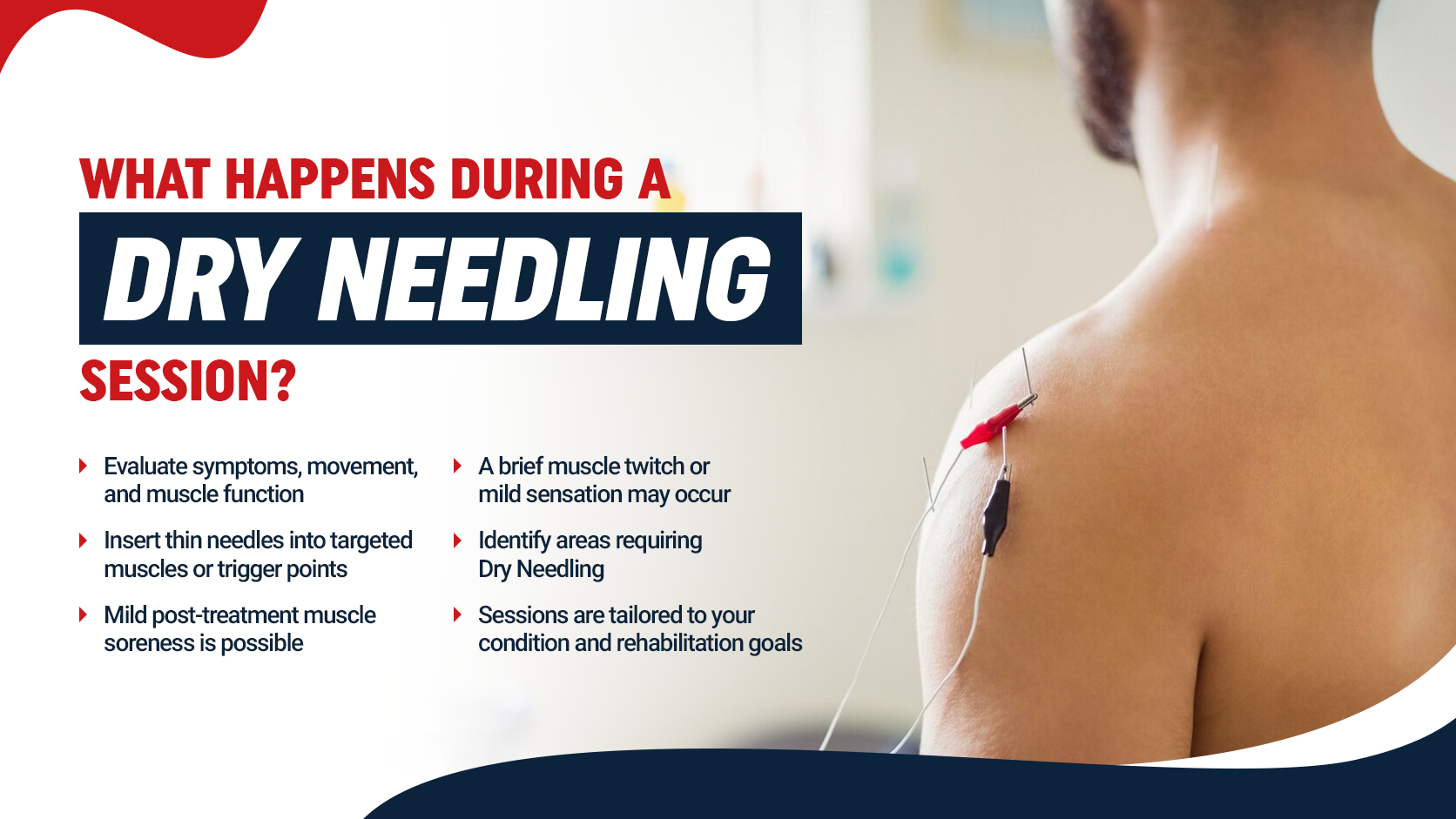
What Happens During a Dry Needling Session?
Before treatment, a physical therapist evaluates your symptoms, movement, and the muscles that may be contributing to your problem. If dry needling is appropriate, the therapist identifies the areas requiring treatment and explains the procedure.
During treatment, thin needles are inserted into targeted muscles or trigger points. Some patients experience a brief twitch response or mild sensation when the muscle responds to the needle. Following treatment, mild muscle soreness can occur and may feel similar to post-workout soreness.
The exact treatment approach and number of sessions depend on your condition, response to therapy, and rehabilitation goals.
How Do You Find Dry Needling Specialists Near Me?
When searching for dry needling specialists near me, consider more than convenience. Look for licensed physical therapists with relevant training, individualized treatment plans, and a broader rehabilitation approach.
We provide dry needling through licensed physical therapists as part of personalized care. Our Herndon and Fairfax clinics feature modern rehabilitation equipment, one-on-one treatment, and programs that can integrate dry needling with orthopedic, sports, post-surgical, and other physical therapy services.

This allows us to determine whether dry needling is appropriate and, when it is, incorporate it into a treatment plan based on your specific needs.
Is Dry Needling Right for Everyone?
No. Dry needling is not necessary for every patient, and it should not be treated as a universal solution for pain. Some people may benefit more from therapeutic exercise, manual therapy, strengthening, movement retraining, or other rehabilitation techniques.
That is why an assessment matters. We evaluate your condition, movement patterns, symptoms, and goals before recommending treatment. If dry needling is suitable, we can incorporate it into a comprehensive rehabilitation program.
Take the Next Step Toward Better Movement
If persistent muscle tightness, trigger points, or pain are affecting how you move, a professional evaluation can help determine what treatment approach makes sense for you. At Virginia’s Physical Therapy, we provide personalized rehabilitation and use dry needling when it is clinically appropriate for the individual patient. Contact us today to discuss your symptoms and explore whether dry needling could be part of your recovery plan.
Frequently Asked Questions